 Silkway Med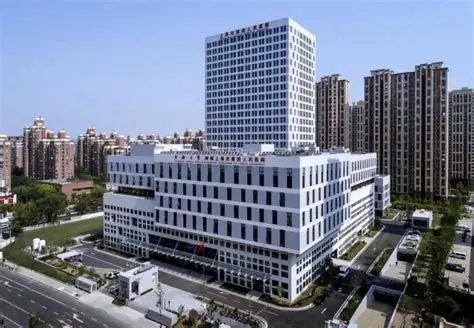
Shanghai · Tongji University
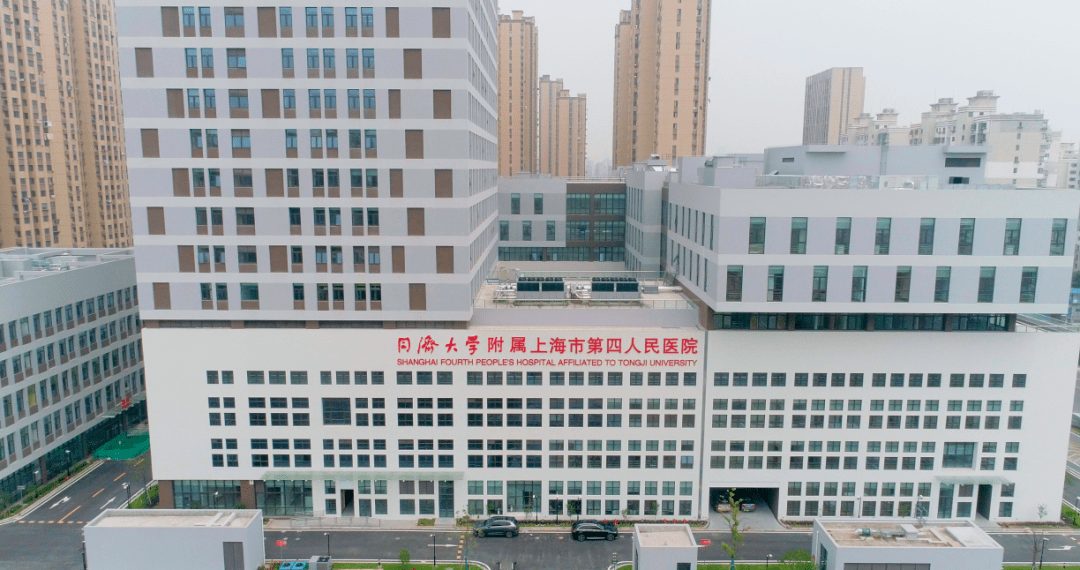
Shanghai Fourth People's Hospital
(同济大学附属上海市第四人民医院)
Shanghai Fourth People's Hospital, affiliated with Tongji University, is a national model institution for traditional Chinese medicine work in general hospitals, a Shanghai model institution for standardized pediatric outpatient and emergency care, one of the first Shanghai medical institutions recognized as geriatric-friendly with excellent service, and a Shanghai volunteer service base.
It has 1,000 beds and 140,000 square meters of floor space. The hospital is equipped with major technology: a da Vinci surgical robot, two 3.0 T research MRI scanners, dual-source CT, a linear accelerator, PET/CT, and more. It has 50 clinical and diagnostic departments, including 1 national key specialty, 4 Shanghai key disciplines, 5 key specialties, and 3 Shanghai studios for carrying on the legacy of renowned traditional Chinese medicine doctors.
The hospital has attracted 120 specialists of various ranks — chairs and vice-chairs of national professional societies, recipients of the National Science Fund for Distinguished Young Scholars, Changjiang Scholars, and others — and has 1 academician workstation. It currently has 2,492 staff, 240 specialists with senior professional titles, 51 doctoral and master's supervisors, 4 chief scientists of the national 973 Program, 3 Changjiang Scholars, 7 recipients of the National Science Fund for Distinguished Young Scholars, 9 recipients of the Excellent Young Scientists Fund, 13 young high-level specialists returned from abroad, 4 recipients of the special State Council allowance, 3 municipal-level renowned traditional Chinese medicine doctors, and 26 specialists at the level of vice-chair of national and municipal societies or above.
General practice, anesthesiology and perioperative medicine, and neurology are accredited residency training bases. The hospital has developed a number of specialized areas — interventional treatment of cardiovascular, cerebrovascular, and peripheral vascular diseases; anesthesia and perioperative management of elderly patients; treatment of emergency and critical conditions and trauma recovery; in the diagnosis and treatment of multiple myeloma, mitral valve repair, and stroke thrombolysis the hospital ranks among the national leaders.
The Institute for Translational Research on Brain Function and Artificial Intelligence of Tongji University School of Medicine and the Clinical Research Center for Anesthesiology and Perioperative Medicine have received funding for 1,088 projects, including major and priority projects of the National Natural Science Foundation of China and grants for distinguished and excellent young scholars.
Leading specialists · 8
Meng Xu (孟旭)
chief physician, professor, doctoral supervisor
An authority on heart valves in China, a National Renowned Doctor, and winner of the Golden Scalpel award in cardiac surgery; creator of an original four-step mitral valve repair technique; specializes in valvular heart disease, atrial fibrillation surgery, heart failure, and heart transplantation; has performed more than ten thousand heart operations in total; member of the American Association for Thoracic Surgery (AATS).
Tu Xiaohuang (涂小煌)
chief physician, professor, doctoral supervisor
Specializes in gastric cancer, colorectal cancer, abdominal tumors, minimally invasive bariatric surgery, and treatment of abdominal wall hernias.
Song Zhenshun (宋振顺)
chief physician, professor, doctoral supervisor
Specializes in complex liver cancer cases, pancreatic cancer, gallstone disease, and minimally invasive biliary surgery; winner of the State Science and Technology Progress Award (second class).
Hu Xiaowu (胡小吾)
chief physician, professor, doctoral supervisor
A pioneer of deep brain stimulation (DBS) for Parkinson's disease in China; 25 years in functional neurosurgery and about 3,000 Parkinson's disease operations — among the best in the country; specializes in Parkinson's disease, essential tremor, refractory pain, and recovery from vegetative states.
Chen Shunjie (陈舜杰)
chief physician, Doctor of Medicine
Main areas: refractory nephritis, acute renal failure, and dialysis complications; his department ranks first in Shanghai year after year in nephrology care quality control.
Li Mengjun (李孟军)
chief physician, professor, doctoral supervisor
An authority on the spine; specializes in cervical spine disorders, lumbar disc herniation, complex hip and knee replacement, osteoporotic fractures in the elderly, and correction of spinal deformities.
Wang Yaping (王亚平)
chief physician
A National Renowned TCM Doctor; specializes in liver cirrhosis, atrophic gastritis, insomnia, traditional Chinese medicine recovery after cancer surgery, and fatty liver disease.
Shi Jun (施俊)
holder of two doctoral degrees, chief physician of the traditional Chinese medicine department
Specialist in oncology combining Western and Chinese medicine; specializes in lung nodules, gastrointestinal tumors, breast nodules, and management of precancerous changes of the digestive tract.